Mitch, on the route
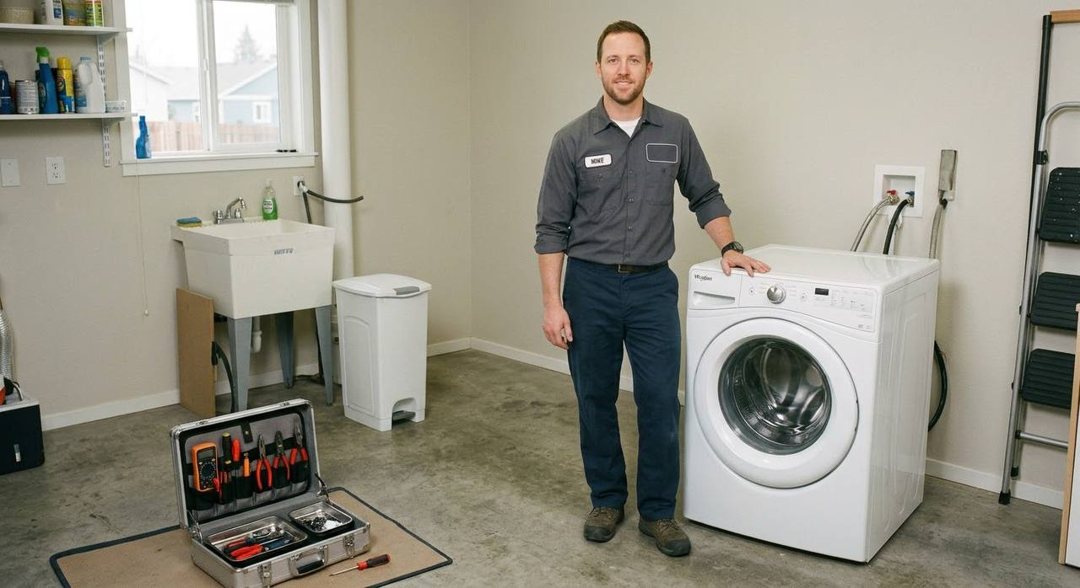
Fircrest dryers live in basements and vent a long way.
Fircrest dryers live in basements and vent a long way. The typical house here sends its dryer duct across a daylight basement and out a far wall, and forty years of lint in that run is the single most common reason a Fircrest dryer 'stopped drying.' Before we touch the machine we measure airflow at the vent, because a new heating element cannot fix a duct.
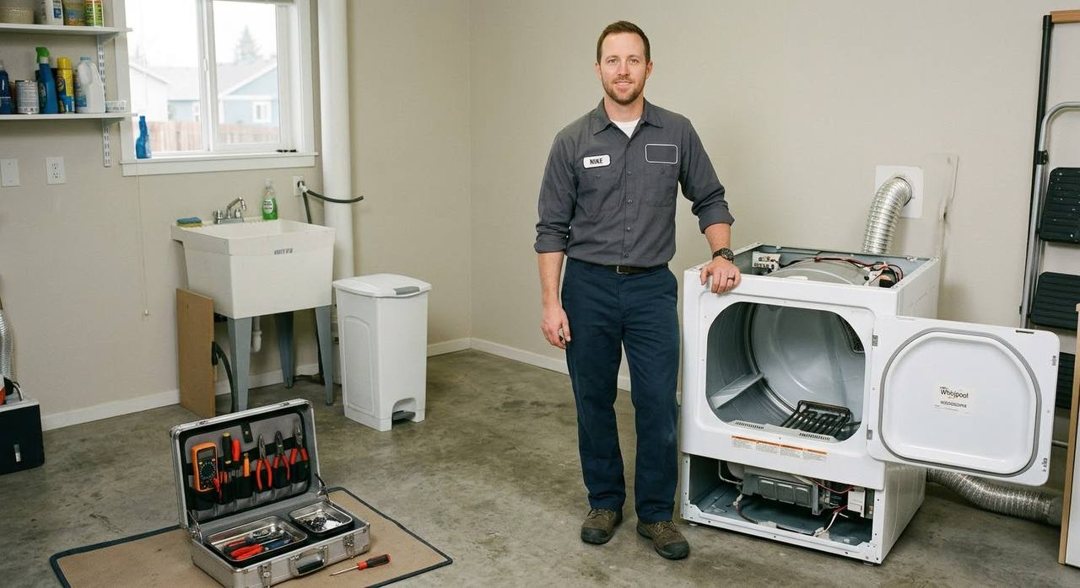
The machines themselves are often older Whirlpool-built Kenmores and Maytags — durable, simple and worth keeping. Belts, idler pulleys, thermal fuses and door switches are the common parts, and they ride on the van. Electric is the norm; gas dryers exist but are the minority in Fircrest's older stock.
Airflow gauge on the vent before the cabinet opens. Fircrest runs are long enough to mimic a dead element.
A dryer tripping in a 1950s panel is as likely the breaker as the dryer. We test the circuit first.
Belts, pulleys and fuses for the Kenmore-and-Maytag generation are stocked and inexpensive.
Vent. Almost certainly. Long basement runs load up with lint; once cleared, the same dryer dries in one cycle.
Usually yes — the machine around it is built better than most new ones. We check the motor and drum bearing first so you are not repairing a dryer that is about to need more.
We meter the circuit and the element. In Fircrest's older panels a weak breaker is a common culprit; if it is the dryer, it is usually a shorted element or a failing motor.
Call with the make and the symptom. The written number comes after the diagnosis at your door.
Phones are answered through the working day; the form is for evenings. Either way you hear back with an actual window, not a range of days.
Mon–Fri 8–6:30 · Sat 9–4