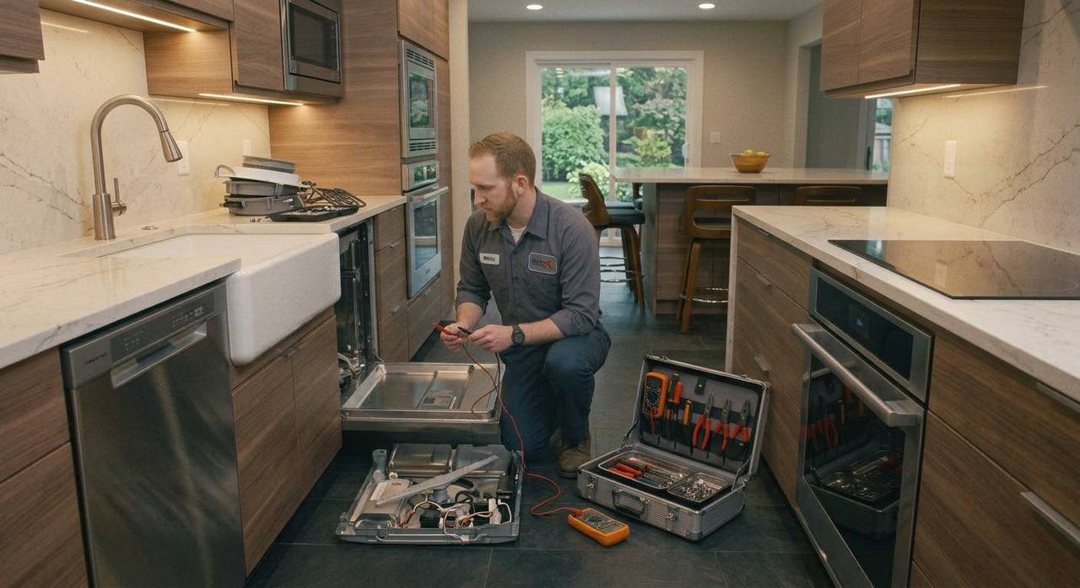
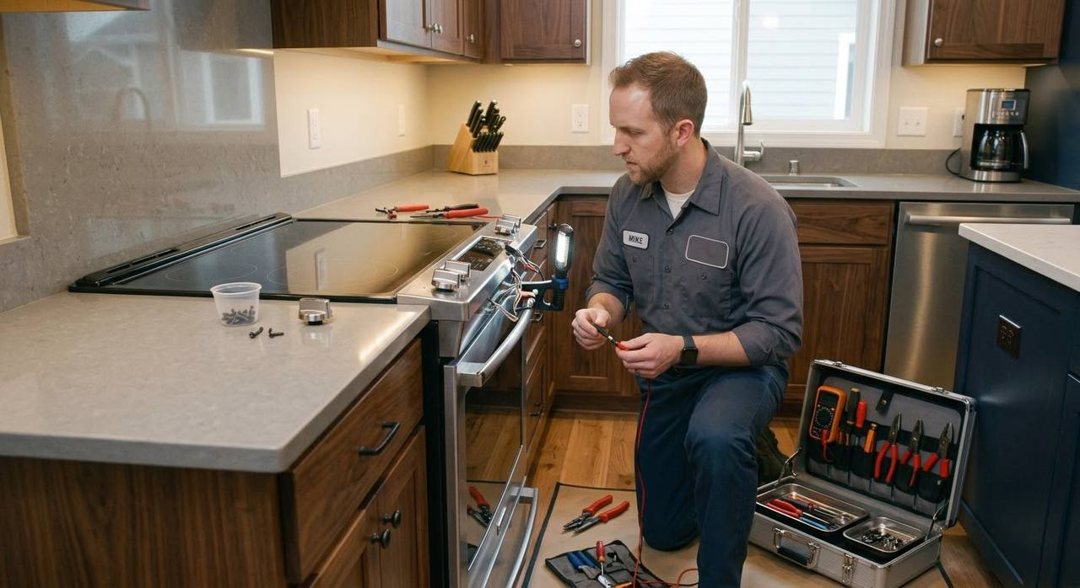
Elements, igniters, temperature sensors, control boards and door hinges β electric, gas, dual-fuel and induction, from 1950s Fircrest ranges to new induction slide-ins.
MonβFri 8β6:30 Β· Sat 9β4
Range and oven work on our route spans a century of kitchens. Fircrest and the North End have electric ranges in alcoves built for smaller stoves; Chambers Bay and Gig Harbor run induction cooktops and double wall ovens; Twin Lakes has wall ovens set into brick. The faults are consistent β bake and broil elements, igniters, temperature sensors, door hinges and control boards β but the access varies enormously, and we plan for it.
Oven temperature complaints get a thermocouple test rather than an opinion: a genuine twenty-five-degree drift is a sensor or board; a 'runs hot' complaint is often calibration. Gas work covers igniters, valves and burner assemblies; anything on the house side of the shutoff belongs to a plumber, and we say so.
Bake element, igniter or relay.
Sensor tested against a reference; board if the sensor is fine.
Igniter, spark module, valve.
Board, fan or pan detection β read before parts.
Hinges and gasket β cheap, and it fixes the temperature too.
Thermal fuse β a known failure after high-heat cycles.
Describe the machine and the symptom on the phone. We will tell you honestly whether a visit makes sense before you book one.
π Call (425) 494-6646Very likely β elements and switches for those ranges are still made. We check the wiring behind it as part of the visit.
Yes. Error codes are read first; most faults are boards or cooling fans, not the glass.
Yes, and cheaply: a temperature sensor is a small part. We confirm the drift with a thermocouple before ordering it.
Call with the make and the symptom β the diagnosis starts on the phone and finishes with a written number at your door.
Phones are answered through the working day; the form is for evenings. Either way you hear back with an actual window, not a range of days.
MonβFri 8β6:30 Β· Sat 9β4